
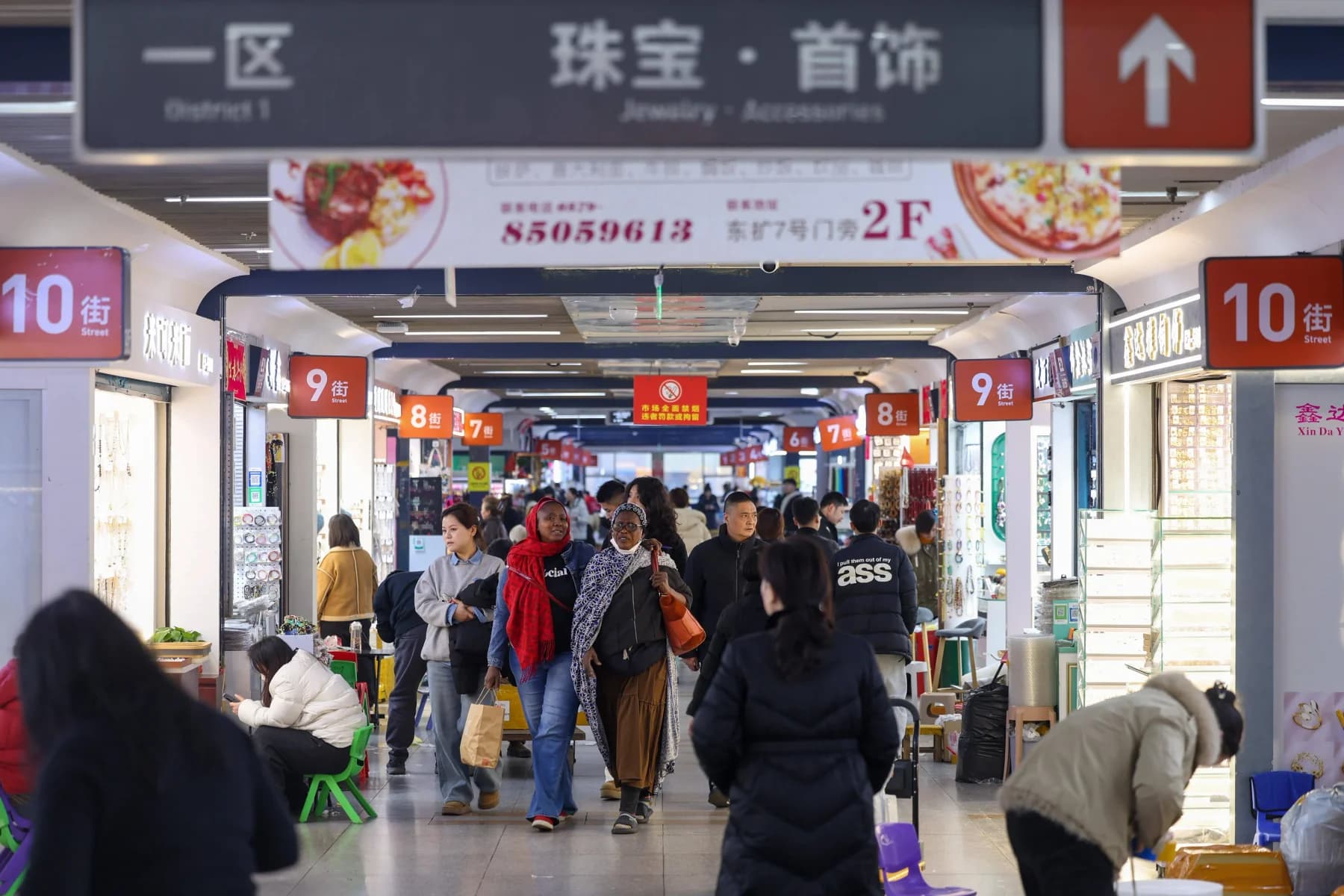
If you have ever bought a holiday decoration, an affordable piece of jewelry, a novelty toy, or a zipper on Amazon, Shopify, or in a local dollar store, chances are high that it originated in Yiwu, China.
Known worldwide as the “World’s Supermarket,” Yiwu hosts the world's largest wholesale market for small commodities. Today, the city connects over 2.1 million distinct products with buyers across 233 countries and regions.
Yet, Yiwu is not an oceanic shipping port, nor was it endowed with abundant natural resources. How did an impoverished, landlocked county in central Zhejiang transform into the manufacturing and distribution nerve center of global retail?
The story is a 40-year journey driven by entrepreneurial resilience, strategic trade-industry synergy, and relentless digital adaptation.
1. The Historical Roots: “Sugar for Feathers” & Market Deregulation
Yiwu’s trading dominance did not happen overnight; it began out of pure necessity.
- The Tradition of “Sugar for Feathers” (鸡毛换糖): Situated in hilly, resource-scarce terrain, Yiwu farmers historically struggled to subsist on farming alone. Starting in the Ming and Qing dynasties, locals took to the roads carrying shoulder poles. They traded homemade brown sugar candy for chicken feathers and waste materials, which were then processed into crop fertilizer or turned into feather dusters to sell. This grassroots hustle instilled deep commercial instincts, cost-efficiency, and resilience across generations.
- The 1982 Policy Breakthrough: During China’s early Reform and Opening-up era, private trade was often strictly curbed. However, in 1982, visionary local leadership formally opened the Huqingmen market (义乌湖清门市场)—a modest open-air lane with just 705 stalls.
- The “Four Permissions” (四个允许): Local authorities pioneered regulations that permitted farmers to do business, engage in long-distance commodity transport, open private urban storefronts, and run multi-channel wholesale operations. This transformed spontaneous underground trade into legitimate commerce, launching Yiwu's strategy of “Building the City Through Commerce” (兴商建市).
2. The Supply Chain Evolution: From “Buy & Sell Nationwide” to “Trade-Industry Synergy”
In its early stages, Yiwu operated merely as a domestic transit hub, earning slim margins by buying goods from manufacturing towns in Guangdong, Wenzhou, and Taizhou and reselling them nationwide. But relying solely on third-party products left merchants vulnerable.
In 1993, the city launched its pivotal “Trade-Industry Synergy” (贸工联动) initiative, establishing an agile “Front Shop, Back Factory” (前店后厂) ecosystem:
Direct Factory Clusters
Merchants leveraged direct consumer feedback from their market stalls to establish localized manufacturing bases. Today, the surrounding region produces massive shares of the world's socks, fashion jewelry, toys, apparel, zippers, and household items.
Extreme Agile Manufacturing
Unlike traditional industrial clusters, Yiwu’s supply chain is built for ultra-fast, low-risk iteration.
- Product ideas can transition from 3D concept modeling to functional prototypes and batch manufacturing in under 24 hours.
- This rapid flexibility allows Yiwu suppliers to cater to fragmented, fast-changing global e-commerce trends and small-batch custom OEM/ODM requests with ease.
3. Four Decades of Six Market Generations
Yiwu’s physical marketplace has evolved through six distinct generations to meet changing procurement scale:
- 1st1982 · Huqingmen
Open-air street stalls set on cement slabs.
- 2ndMid-1980s · Xinchemen
Covered shed-frame stalls that shielded goods from rain.
- 3rdLate 1980s · Chengzhong Road
Enclosed, multi-floor wholesale facilities.
- 4th1990s · Binwang Market
A modern commercial complex with categorized product zones.
- 5th2002+ · International Trade City
A multi-district procurement mall spanning more than 6.4 million m².
- 6thToday · Digital Trade Center
AI-enabled, digitally integrated omnichannel trade hubs.
4. Riding the Waves of Global Trade
Yiwu’s exponential growth was catalyzed by strategically seizing key globalization milestones:
- China's WTO Accession (2001): Joining the World Trade Organization opened the floodgates for international buyers. Yiwu shifted rapidly from domestic trade to direct exporting, leading to the creation of the International Trade City.
- The “Yixin'ou” Freight Railway (Belt & Road): Historically reliant on coastal sea ports like Ningbo and Shanghai, Yiwu launched the “Yiwu-Xinjiang-Europe” cargo train line. As one of the world's longest rail freight corridors, it connects Yiwu directly to Central Asia and Madrid, transforming the inland city into a premier intermodal transit hub.
- Digital Commerce & AI Integration): Instead of losing ground to online platforms, Yiwu embraced cross-border e-commerce, live-stream sourcing, and generative AI design tools that speed up new catalog iterations up to threefold.
What Yiwu's Ecosystem Means for Global Buyers Today
Yiwu is no longer just a place to find low-cost novelties; it is an integrated, low-friction sourcing ecosystem where product ideas move from design to production and global shipping with speed.
However, with thousands of suppliers, varying quality tiers, and rapid turnover, successfully navigating this massive market requires on-the-ground expertise.
At YiwuProducts.com, we act as your eyes, ears, and quality shield in Yiwu. From supplier verification and real-time factory audits to sample consolidation, custom packaging, and freight forwarding, our dedicated sourcing agents ensure that you harness the full efficiency of the World’s Supermarket—safely and profitably.